David Hunter
The Chemistry of DeathDavid Hunter is both a village doctor and a forensic anthropologist whose expertise in death has never equipped him to understand the loss of his own family. After moving to Manham to escape London, he tries to leave his former career behind; the discovery of Sally Palmer’s body pulls him back into it, with consequences for his work, his friendships, and his effort to live with grief.
Background and Arrival
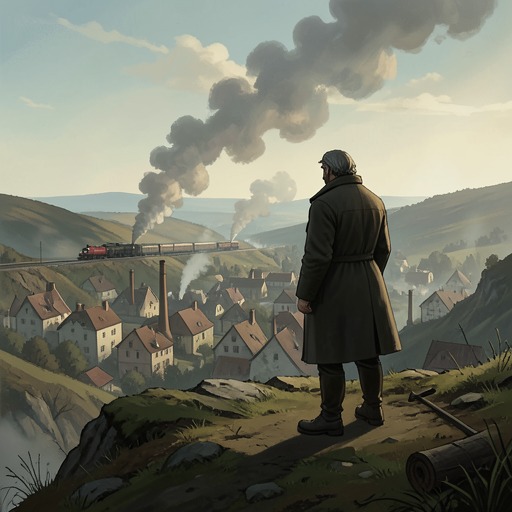
Three years before the events surrounding Sally Palmer’s murder, David arrived at Manham’s small railway station on a wet March afternoon. The flat marshland and open landscape of the Norfolk Broads were unfamiliar to him, but their distance from London was what mattered: he had come looking for separation from the life he had left there. He had sold his car and given away his mobile phone, and had made no arrangements for the journey from the station to the village. His lack of practical preparation reflected how little he was able to plan at the time.
The opportunity came through a small notice in The Times: a rural medical practice needed a general practitioner for a six-month temporary contract and offered accommodation. David applied without much expectation, then accepted the offer by return of post when it arrived. The position brought him to Manham as a village doctor, but it also placed him in a close-knit community whose inhabitants would soon encounter the professional past he had not disclosed.
That past was substantial. David had first qualified in medicine, then changed direction to earn a PhD in anthropological science. He subsequently spent time in the United States and returned to the United Kingdom as a specialist in forensic anthropology. His work had taught him to interpret the physical processes that follow death and to use them to establish when and how a person died. To him, this was disciplined professional knowledge; it did not provide answers to the personal questions that followed the deaths of Kara Hunter and Alice Hunter.
David’s move to Manham therefore begins not as a simple career change but as an attempt to get away from an unbearable collision between expertise and bereavement. His knowledge had once allowed him to reconstruct the deaths of people he knew only through their remains. After losing his wife and daughter in a car crash, he could understand the physical changes their bodies would undergo, yet could not understand what had become of the lives that had animated them. For a time, he could not return to forensic work without being reminded of that unanswered loss.
Return to Forensic Work
The discovery of Sally Palmer’s body brought David’s former expertise back into the village investigation. When Mackenzie first pressed him about his background, David agreed only to help identify the body, insisting that he would not become involved beyond that. Mackenzie had already researched his credentials: after qualifying in medicine, David had earned a PhD in anthropological science, worked in the United States, and returned to Britain as a forensic anthropology specialist. David’s attempt to keep that history separate from his new life in Manham began to fail as soon as the investigation required the knowledge he had tried to leave behind.
He did not immediately explain the change in his work to the people around him. When Linda Yates wondered why he had been away from the surgery, David gave her a guarded account: he was helping the police and had once been a specialist. Later, he told a friend more of the truth, and Henry Maitland listened with surprise as David described both his earlier career and his assistance to Mackenzie. These conversations mark a gradual shift from concealment toward allowing others to know what he had done before coming to Manham.
In the laboratory, David’s analysis of Lyn Metcalf’s remains gave the investigation a more precise chronology. He concluded that she had been dead for about six days, and that her killer had kept her alive for nearly three days before killing her. Her body, like Sally Palmer’s, had lost blood elsewhere before being taken to the marsh and left there. The site itself yielded little: the baked ground preserved no footprints, and the only trace David noted was rope fibre caught on Lyn’s broken fingernails. His casts of the cut cervical vertebrae strengthened his conclusion that the same knife had killed both women, even as the absence of identifying evidence left the killer unknown.
Although David believed his laboratory work was nearly complete, he remained emotionally invested in what the police did next. When news reports described a local suspect, he pressed Mackenzie for information, arguing that secrecy would leave the village to speculate. He learned that the suspect’s car had been seen outside Jenny Hammond’s house and questioned whether the police had been led there by an anonymous tip. The exchange shows David moving beyond forensic interpretation: he was trying to understand the investigation as it unfolded and to protect someone whose safety mattered to him.
Rescue, Confrontation, and Betrayal
When David reached the cellar where Jenny Hammond was being held, a bloodstained wedding dress draped over a chair made him call out for her. George Mason’s grandson then emerged from the shadows. David’s attention shifted from the scene to the person he had come to find, and the encounter became a direct confrontation. During the struggle, David seized a socket spanner and used it to stop Mason’s grandson from reaching his knife.
David turned to Jenny and found her alive but badly weakened. He identified himself, and she responded to him. Recognizing the chemical odor on her breath as a sign of diabetic ketoacidosis, he understood that she urgently needed insulin—but he had none with him. The rescue therefore did not end with finding her: her immediate survival depended on treatment David could not provide in that cellar.
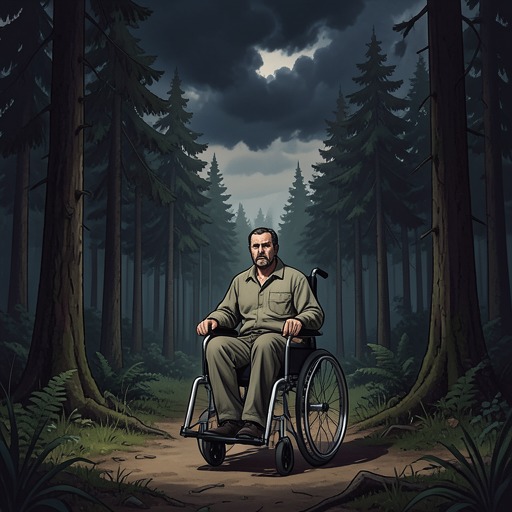
Soon afterward, Henry Maitland injected David with an emptying syringe. As the room receded and David lost consciousness, he saw Henry rise from his wheelchair and walk toward him. The sight overturned David’s understanding of Henry’s physical incapacity at the moment David was least able to act on what he had seen. His attempt to save Jenny had brought him into a new danger, and the revelation came as his own grasp on the situation disappeared.
Narrative Perspective and Significance
David’s first-person narration places the village investigation inside the consciousness of a man trained to interpret death, while making clear that professional knowledge cannot account for every kind of loss. The narrative first brings the Yates brothers to him after their discovery of Sally Palmer, but David later corrects the assumption that this discovery began the story: it was the moment when the village first understood what had been living among them. That distinction makes his role more than forensic. He is both the doctor the community turns to and the narrator who recognizes how much remained unseen beneath its familiar surface.
His account is shaped by the distance between clinical certainty and personal uncertainty. David can describe what evidence establishes about a death, but his own bereavement leaves questions that such evidence cannot resolve. The investigation draws him back into work he had tried to leave behind; the story’s reversals then expose how little even close familiarity can guarantee about another person. His professional authority helps make hidden events legible, while his narration keeps the human consequences—not merely the physical evidence—at the center.